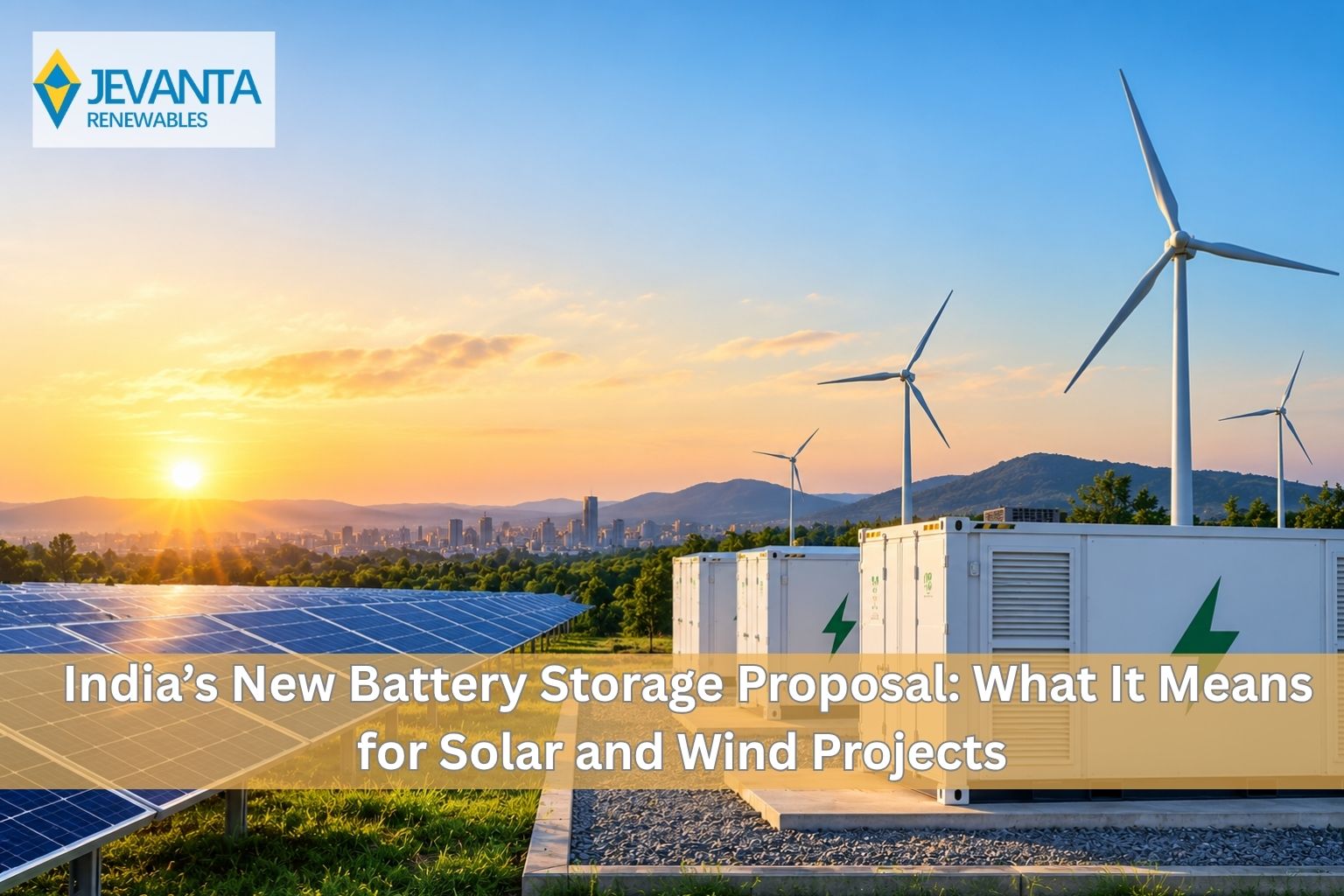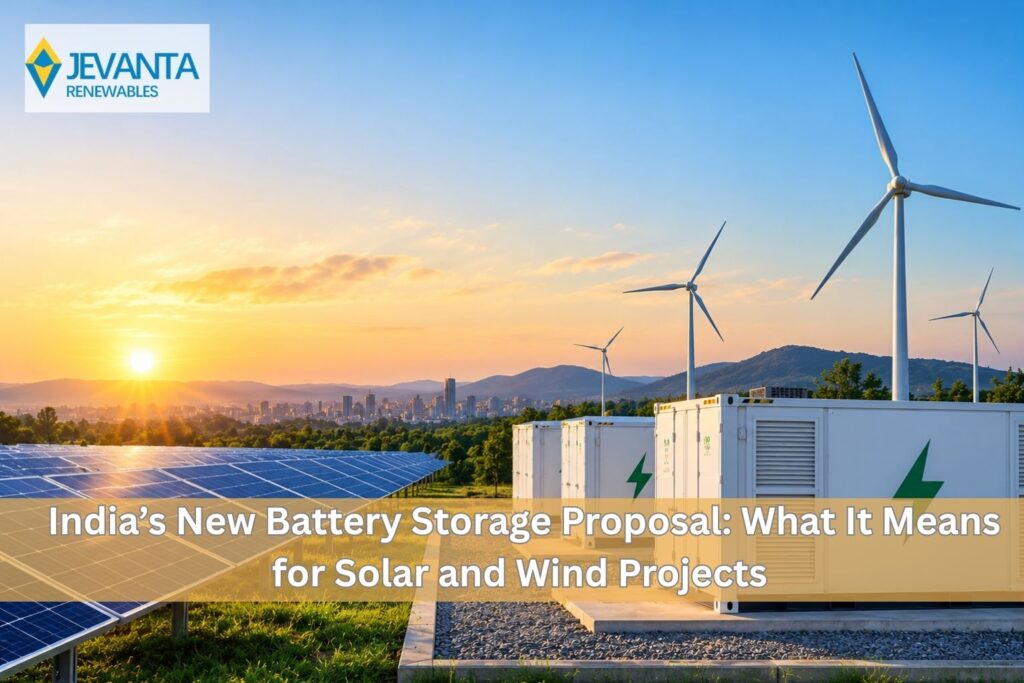
For years, solar and wind developers in India could build a project, connect it to the grid, and move on to the next site, but not anymore. On September 3, 2026, the Central Electricity Authority (CEA) notified a draft amendment that would make co-located storage a technical requirement for new renewable projects, not an optional add-on. If this draft is notified in its current form, every large solar or wind developer in the country will need to think seriously about a battery energy storage system in India before they finalise a single design.
This is not a minor paperwork glitch. It changes how projects get financed, how EPC contracts get structured, and how quickly capacity can actually reach the grid.
What the CEA Has Actually Proposed
The draft, called the Central Electricity Authority (Technical Standards for Construction of Electric Plants and Electric Lines) 2nd Amendment Regulations, 2026, was issued under the Sec 177 of the Electricity Act, 2003. Stakeholders and the public have until October 4, 2026, to submit comments, so this is still a proposal rather than a final rule. But the narrative is clear enough that developers can not afford to wait and see.
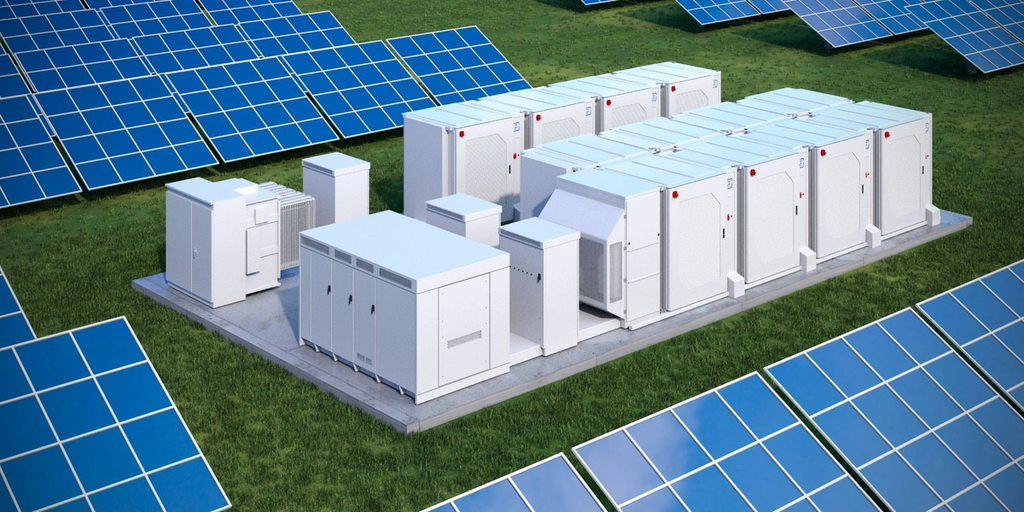
According to the draft, recent ground-mounted solar and onshore wind projects commissioned from July 1, 2027 might need co-located energy storage equal to at least 10% of their installed capacity, with a minimum discharge duration of two hours.
A 100 MW solar plant, for instance, would need roughly 10 MW of storage capable of running for two hours. Between July 2029 and June 2031, the bar rises: the same 10% capacity requirement stays, but the minimum duration doubles to four hours. The draft also emphasises on grid-forming technology. At least 15% of a project’s inverters would need grid-forming control, and every power conversion system inside the storage setup would need the same capability.WHich now makes storage not just an option but a necessity
None of this appears out of nowhere. The CEA issued an advisory in February 2025 recommending voluntary co-location of storage at similar levels. Now, that recommendation is becoming a requirement.
What Is the Root Cause behind this?
India’s renewable energy capacity has grown fast, and that speedy evolution has created a real problem: curtailment.
When energy generation via solar or wind exceeds what the grid can absorb at that moment, plants are told to cut output, even though the panels or turbines are perfectly capable and have the capacity to produce more energy. That’s lost revenue for developers and lost clean power for the grid.
Solar batteries do not remove that mismatch entirely, but they buy time. Power generated at 1 pm can be discharged at 7 pm when demand actually spikes, instead of being abruptly curtiled or sold at a lower price. As more gigawatts of solar and wind generated energy comes online across the country the nature of it changes, that flexibility stops being a nice-to-have and starts being the thing that keeps the grid from getting unstable.
What is the main takeaway for Developers and EPC Timelines?
For any solar developer already in the middle of land acquisition, financing, or interconnection studies for a project and has targetted a mid-2027 commissioning date, this proposal has immediate consequences. Storage sizing has to be part of the initial design, not something bolted on later. Financial models need to account for the added capital cost of storage from day one, or the RESCO and BOOT arrangements many developers rely on will need to be reworked.
There is also a technical learning curve. Grid-forming inverters and storage-integrated solar battery storage systems are a different engineering problem than a straightforward grid-following solar plant. EPC partners who haven’t handled combined solar-plus-storage projects before may need to build that capability quickly, or bring in someone who already has.
This is where the gap between developers who treat this as a compliance headache and those who treat it as a design opportunity will start to show. A well-sized storage system doesn’t just satisfy a regulation. It reduces curtailment losses, smooths revenue, and can even open up new participation in ancillary services markets down the line.
The Business Case Beyond Compliance
Even without a mandate, the micro economics to pair solar with storage has indicated improvement. A properly sized battery energy storage system in India lets a commercial or industrial consumer shift stored solar power into evening peak hours, avoid demand charges, and reduce dependence on diesel backup. For businesses that run their facilities in Mumbai and other high-tariff industrial clusters, the payback period on a combined solar and storage installation typically lands somewhere between four and six years, after which the system keeps delivering low-cost power for well over a decade.
What Developers Should Do Before 2027
There is a high level business risk rather an opportunity cost involved in the whole period of gap between setting up new plant and waiting for the final regulation. Land, financing, and interconnection approvals all take time, and a project designed without storage in mind now may need costly rework later if the rule is notified close to its current draft form.
The more sensible path is to start sizing storage into new projects today, even ahead of the July 2027 deadline. That means working with an EPC partner who already understands renewable energy storage integration, grid-forming inverter requirements, and how to structure financing so storage doesn’t blow up project economics.
India’s renewable sector has moved past the phase where solar and wind alone were the finish line. The next phase is about making that power dispatchable, reliable, and useful exactly when the grid needs it. Whether the CEA’s draft is notified as written or adjusted after the comment period, one thing is unlikely to change: a battery energy storage system in India is no longer a future consideration for solar and wind developers. It’s becoming part of the baseline.
At Jevanta Renewables, we’ve been building battery energy storage systems in Mumbai and across India for exactly this reason, well before the CEA’s proposal made storage a talking point. Our CAPEX, RESCO, and BOOT financing models mean developers and businesses don’t need to carry the full upfront cost themselves. A RESCO structure, for example, lets a facility get storage-backed solar power with no initial capital outlay, paying instead for the units it actually consumes.