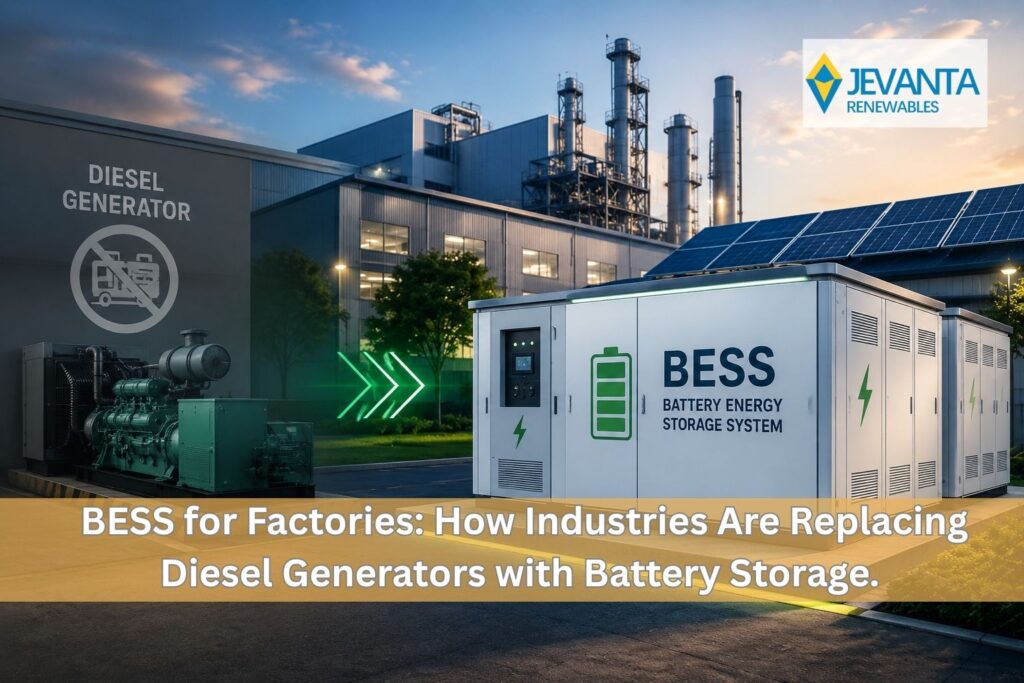
Although the amount of inconvenience that an institution or an industry faces due to unpredictable power cuts and shortages is manageable, a backup system has always been available in one way or another. Imagine a textile company facing an hour-long power cut; the amount required to use 1 single unit of electricity ranges somewhere between ₹28 and ₹30, but compared to the amount you pay for 1 unit from the grid, this is exceptionally high. There one has to pay only about ₹8 to ₹9. This is not just the story of one small factory; rather, this is the case with almost 80 to 90% of organisations across Industries.
Also, as we move forward in time, there is a lot of awareness among people about renewable and profitable sources; at the same time, changing geopolitical conditions are also affecting the supply of necessary nonrenewable sources, for which we as a country are highly dependent on exports. So, to overcome this, it is important that we gradually shift towards more sustainable and profitable options. The major challenge faced in transitioning from nonrenewable to renewable sources is power storage, and this is where Industrial Battery Energy Storage comes into the picture.
What is BESS: Battery Energy Storage System
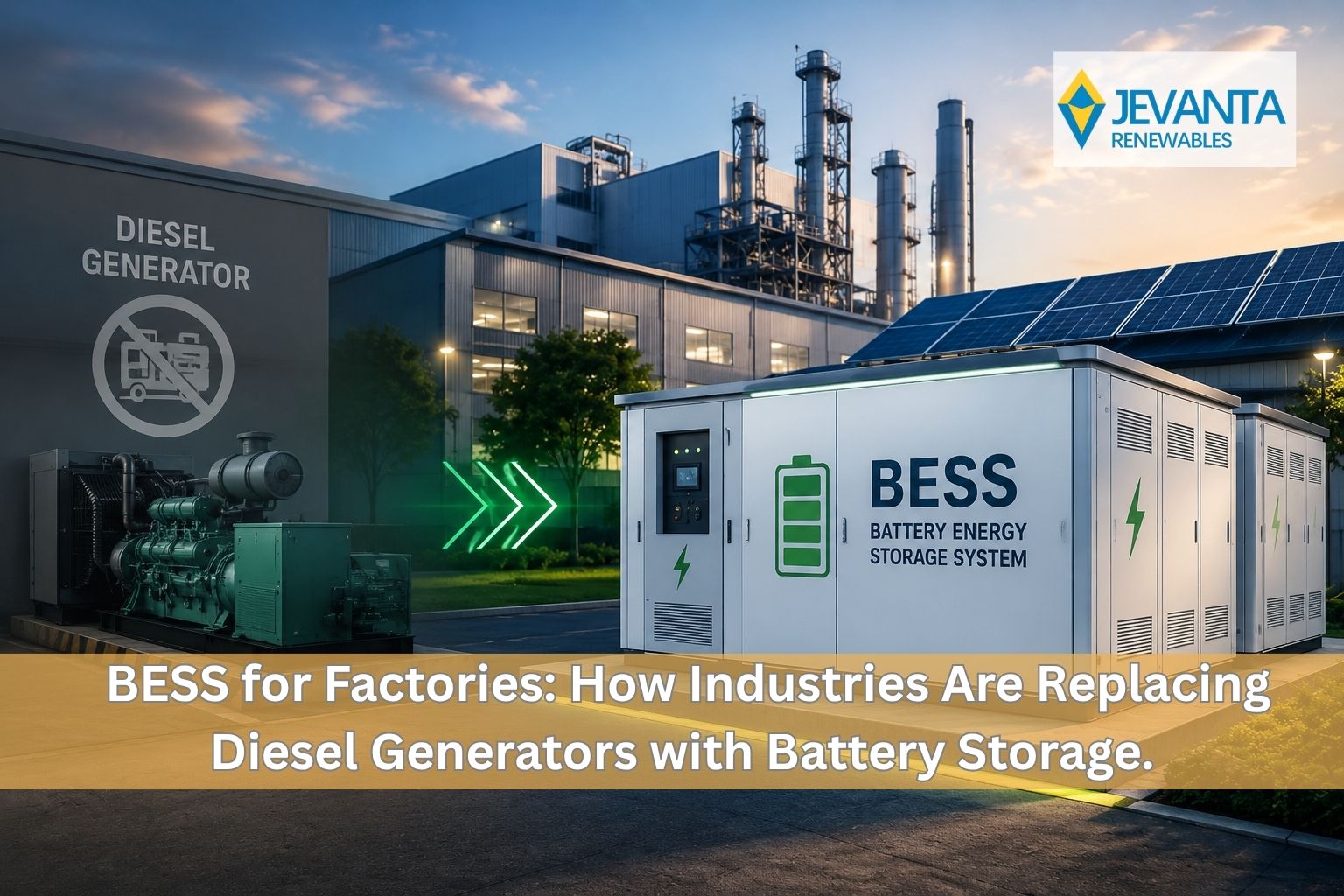
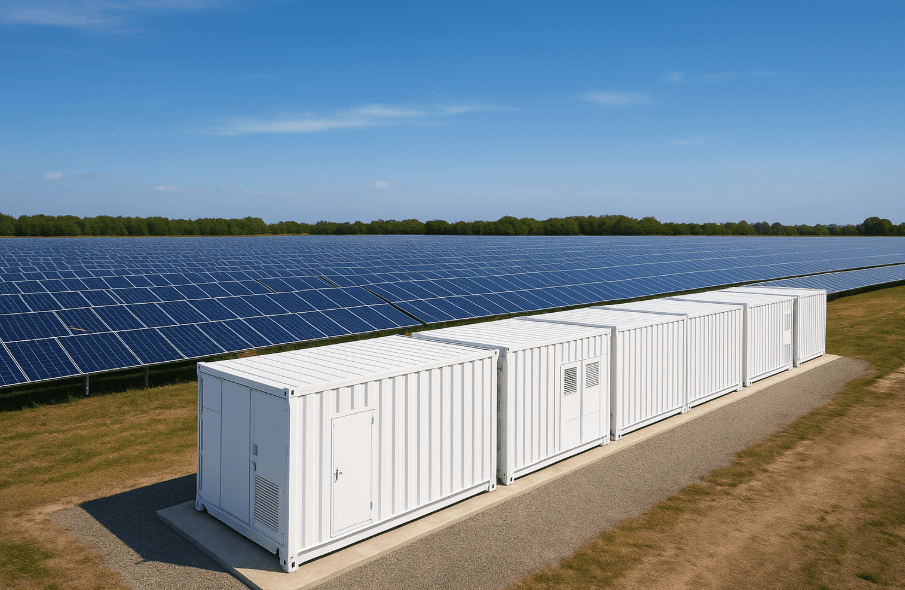
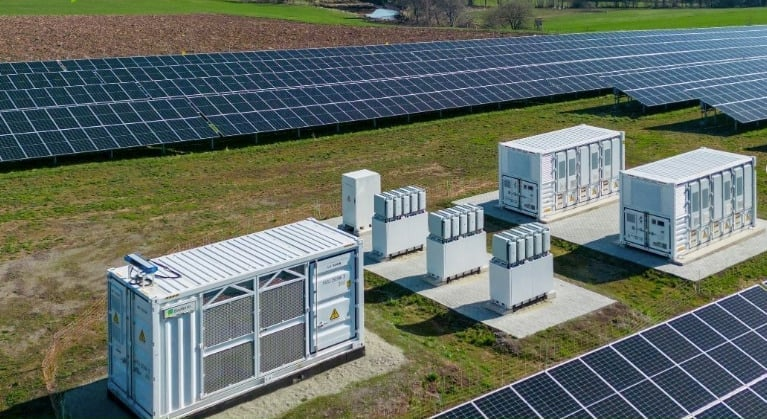
This is a system built essentially in which huge batteries, either individual or in groups, are set up to store the electricity generated via the grid, solar panels or both. Whether it is a smaller institution or a huge factory, BESS will serve as a cheaper option for both. This means storing cheap daytime solar or off-peak grid power and discharging it exactly when it’s needed: during a grid outage, during a peak-tariff window, or to smooth out a sudden spike in machine load.
Since this is a storage system, it is an amalgamation of multiple components; the core components of the BESS are as follows.
- Battery cells: the actual energy storage medium, most commonly lithium-ion today
- Power Conversion System (PCS): converts the battery’s stored DC power into usable AC power for factory equipment
- Energy Management System (EMS): the software layer that decides when to charge, when to discharge, and how to prioritise between backup, peak shaving, and solar integration
- Thermal management: keeps the battery pack within a safe temperature range, which matters enormously in Indian industrial environments where ambient heat is already high
How does BESS squeeze more value from every unit of Energy?
The smart saving mechanism that is used by Commercial Battery storage is not only about storage alone for power cuts provision, but it can also be efficiently used to escape the high industrial tariff charged during the peak demand hours by discharging the stored power during those expensive windows instead of drawing from the grid, and recharge later when tariffs (or solar generation) are cheaper. This can significantly reduce a factory’s monthly charges.
The perfect pairing of Solar and BEES: During peak afternoon, the factory consumption is comparatively less, but the solar generation is reasonably higher, and to bridge the gap between both, a systematic storage system must be present; this can be a cakewalk if a proper Battery Energy Storage System is installed.
Behind an Industrial Battery Storage Setup, there is a more intense nerve centre called EMS- Energy Management System– which is functional to draw grid power during off-peak, cheaper hours and hold it in reserve, discharging only when needed. So this is more like Power Hedging, which can help in financial micro-management.
The X Factors behind BESS’s Edge.
There are multiple reasons why one should definitely opt for BESS instead of Diesel generators. Apart from the environmental edge, there are a few reasons that have been noted down below :
- Lower operating Cost: As mentioned earlier, the operating cost for one unit of electricity generation via a diesel generator is more than half of what it takes via the grid or Solar panels. In that case, having a BESS system always comes in handy.
- Higher uptime and reliability. BESS-backed systems typically deliver 95–99% uptime with millisecond response, compared to diesel’s 85–90% and multi-second start delay.
- Environment-friendly: Because of zero on-site emissions, it’s an ESG scoring system, and so the company’s emission compliance is fulfilled.
- Low Maintenance System: Unlike diesel generators, BESS require no frequent oil changes, fuel filtering, or engine servicing. In that sense, too, it’s a wiser choice.
- No noise, no fumes: A real factor for units operating near residential areas or under tightening local pollution norms.
Pure Financial Aspects :
- Payback period: Factories running diesel gensets for regular load-shedding (not just emergency backup) tend to see the fastest payback, since the fuel-cost savings alone can be substantial. When BESS is paired with solar and used for both backup and peak shaving, the combined savings reduced demand charges, lower energy costs, and eliminated diesel spend typically bring payback well within the system’s operational life. However, the exact timeline depends heavily on how many hours a day the system is actually cycled.
- Financing prospects available: Instead of owning the BESS units up front, factories can simply pay for the power and services delivered; this way, they can shift the capital burden and make the energy arrangement more like an operating expense.
- Tax treatment. Renewable energy and storage assets are eligible for accelerated depreciation under the Income Tax Act, which can significantly improve first-year cash flow for factories that go the CAPEX route — a detail worth discussing with your financial advisor before finalising the ownership structure.
From all the above-listed factors, it is understandable that down the line, the overall profitability in terms of energy expense would increase, and this will have a good impact on the environment as well. So this creates a win-win situation.
Different Battery Combinations & Their Applicability.
Based on the different battery setups available within BESS, a Company should explore and consider all types and what their long-term impacts are exactly.
| Lithium-Iron-Phosphate | Nickel-Mangenese-Cobalt | Lead Acid Batteries |
| Lithium-iron batteries, or LFP batteries, are more standard ones as they have a high thermal threshold of about 270⁰C, making them significantly fire-safe and combating the Indian Heat. | A major advantage of NMC batteries is that they offer high storage in comparatively smaller & congested areas. This helps address the space constraints that most factory setups in urban areas face. But this BESS requires faster replacement than LFP. | They are a bit outdated and don’t really match the industrial requirements of the present day. Their upfront cost is way cheaper than the other 2, but the floor space required and replacement rate are way higher. |
A Profitable Switch: Solar With Battery Backup.
Factories that have the most predictable daily load patterns are the ones that benefit from Battery storage for factories. Getting the sizing, chemistry, and financing structure right for your specific load profile is what separates a BESS installation that pays for itself on schedule from one that underdelivers.
At Jevanta Renewables, we design and deploy battery storage for factories and commercial battery storage systems across Mumbai and Maharashtra’s Industrial Corridor. If diesel is quietly eating into your factory’s margins, it’s worth running the numbers on battery energy storage systems in Mumbai before your next monsoon season of load-shedding arrives.