Every commercial or industrial business evaluating the decision of transitioning to solar eventually runs into a major dilemma: do you buy the system, or do you let someone else own it and simply pay for the power it produces? That decision, CAPEX solar model versus RESCO Solar Model, shapes everything downstream: how much cash leaves your account upfront, how fast you break even, who handles the maintenance calls, and how the asset sits on your balance sheet.
Neither model is universally better. What works for a profitable manufacturing unit with spare capital rarely suits a business that would rather keep its cash for core operations. Here’s how the two actually compare, and what determines which one fits your facility.
The CAPEX Solar Model: You Own It, You Get an Edge.
Under the CAPEX solar model, your business would pay for the solar system outright, either from internal reserves or through a solar loan, and own the asset from day one. Every unit of electricity it generates reduces your grid bill directly, and every tax benefit that comes with it flows to you.
That includes competitive depreciation, which as of now allows commercial and industrial solar installations in India to write off 40% of asset value in the first year alone. For a profitable business that pays high corporate tax, this alone can cut the effective capital outlay by 10 to 15%.
Combine that with net metering credits and the high industrial tariffs seen in states like Maharashtra, where HT consumers often pay ₹8 to ₹10 per unit, and payback periods for CAPEX rooftop systems typically land between 3 and 4 years. Ground-mounted industrial plants run slightly longer, closer to 4 to 5 years, given the larger scale and civil work involved.
The trade-off is obvious: you need the capital, or the creditworthiness to borrow it, and you take on operations and maintenance as your responsibility, either in-house or through an O&M contract with your installer.
The RESCO Solar Model: Someone Else Owns the Risk
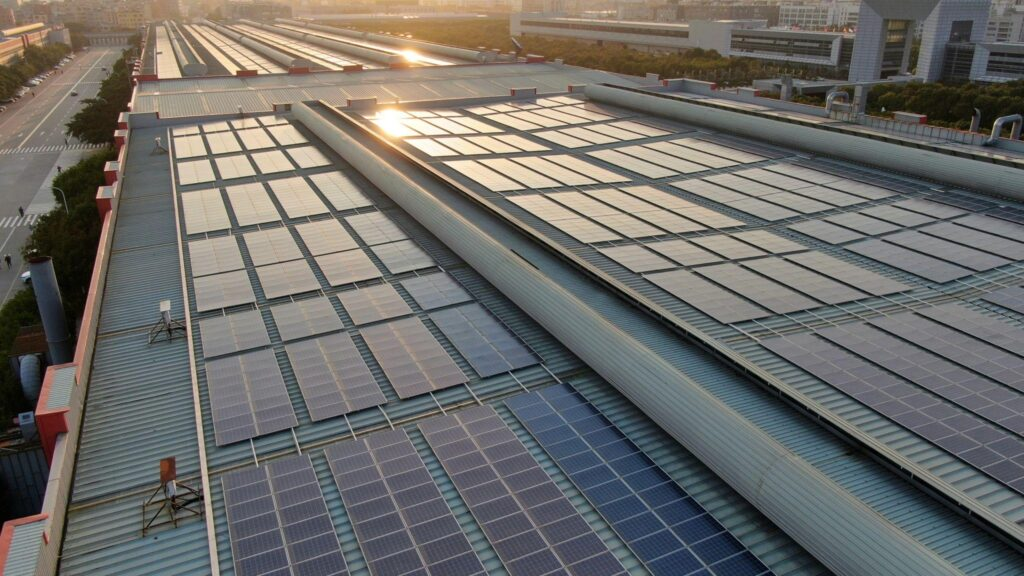
RESCO Solar Model, short for Renewable Energy Service Company, is a significantly different arrangement. A developer, in this case Jevanta Renewables, installs, owns, and maintains the solar system on your rooftop or premises. You don’t pay for the equipment. Instead, you sign a solar PPA (power purchase agreement) and pay a fixed per-unit tariff for the electricity generated, usually somewhere between ₹4.0 and ₹5.5 per kWh depending on system size, location, and contract tenure. That rate sits well below most grid tariffs for commercial and industrial connections, which means savings start from month one with zero upfront expenditure.
This is where the RESCO solar model earns its appeal for a specific kind of business: one whose balance sheet doesn’t benefit meaningfully from accelerated depreciation, perhaps because it isn’t consistently profitable, or one that simply prefers to treat energy as an operating expense rather than a capital commitment. It also removes the maintenance burden entirely. The developer is contractually responsible for keeping the system performing, since their revenue depends on it generating power.
The limitation is equally clear. You do not have ownership of the asset, so you don’t capture the tax depreciation benefit, and your long-term savings, while real, are generally lower than what a fully owned CAPEX system delivers over its 25-year life.
Comparing the Two Where It Actually Matters
When it comes to upfront cost, RESCO wins outright: in that case, capital outlay is not involved, while CAPEX requires either cash reserves or loan financing. On long-term savings, CAPEX tends to come out ahead once the system is paid off, since you’re no longer paying anyone for the power your own asset produces. On risk, RESCO shifts performance and maintenance risk to the developer, which matters if your team has no appetite for managing solar operations. On tax treatment, CAPEX is the only route that lets you claim accelerated depreciation directly. A middle path worth knowing about: BOOT (Build-Own-Operate-Transfer, where the developer owns and runs the system for a defined period before transferring it to your business. It combines the low-entry advantage of RESCO with eventual ownership, which appeals to businesses that want the asset long-term but aren’t ready to commit capital now.
Which Model Actually Fits Your Business
The honest answer depends less on which model is theoretically better and more on your company’s specific financial position. A profitable manufacturing unit with available capital and a meaningful tax liability will usually extract more value from CAPEX, since the depreciation benefit alone can be worth as much as the electricity savings in the early years. A business prioritising cash flow, or one that would rather not tie up capital in an energy asset, tends to find the solar PPA structure under RESCO more practical, especially when scaling across multiple facilities where deploying capital everywhere at once isn’t realistic.
Credit profile matters too. RESCO developers evaluate the offtaker’s financial standing before signing a long-term PPA, since their return depends on payment reliability over 15 to 25 years. Businesses with strong, stable revenue streams generally get better PPA tariffs.
How Jevanta Renewables Approaches This Decision
We don’t push one model across every project. With 950+ MW commissioned across rooftop, ground-mounted, and utility-scale C&I installations, our approach starts with a scenario analysis specific to your business: current tax position, available capital, energy consumption pattern, and how long you plan to operate from the facility. That analysis usually makes the right model fairly obvious.
As a solar panel installation company in India working across CAPEX, RESCO, and BOOT structures, we handle the financial modelling, MSEDCL or DISCOM coordination, and ongoing O&M regardless of which route you take. Industrial solar financing shouldn’t be a guessing game, and for most businesses, the right answer becomes clear once the actual numbers, not just the general pros and cons, are on the table.
If you’re weighing CAPEX against RESCO for an upcoming project, it’s worth running that comparison properly before you commit to either.