Ask any plant head which line item they dread at month-end, and the electricity bill almost always makes the shortlist. Raw material prices can be negotiated, and labour can be planned. Power can’t, because the meter keeps running whether the order book is full or not, and the bill arrives with demand charges, peak-hour rates and a diesel generator top-up stacked on top.
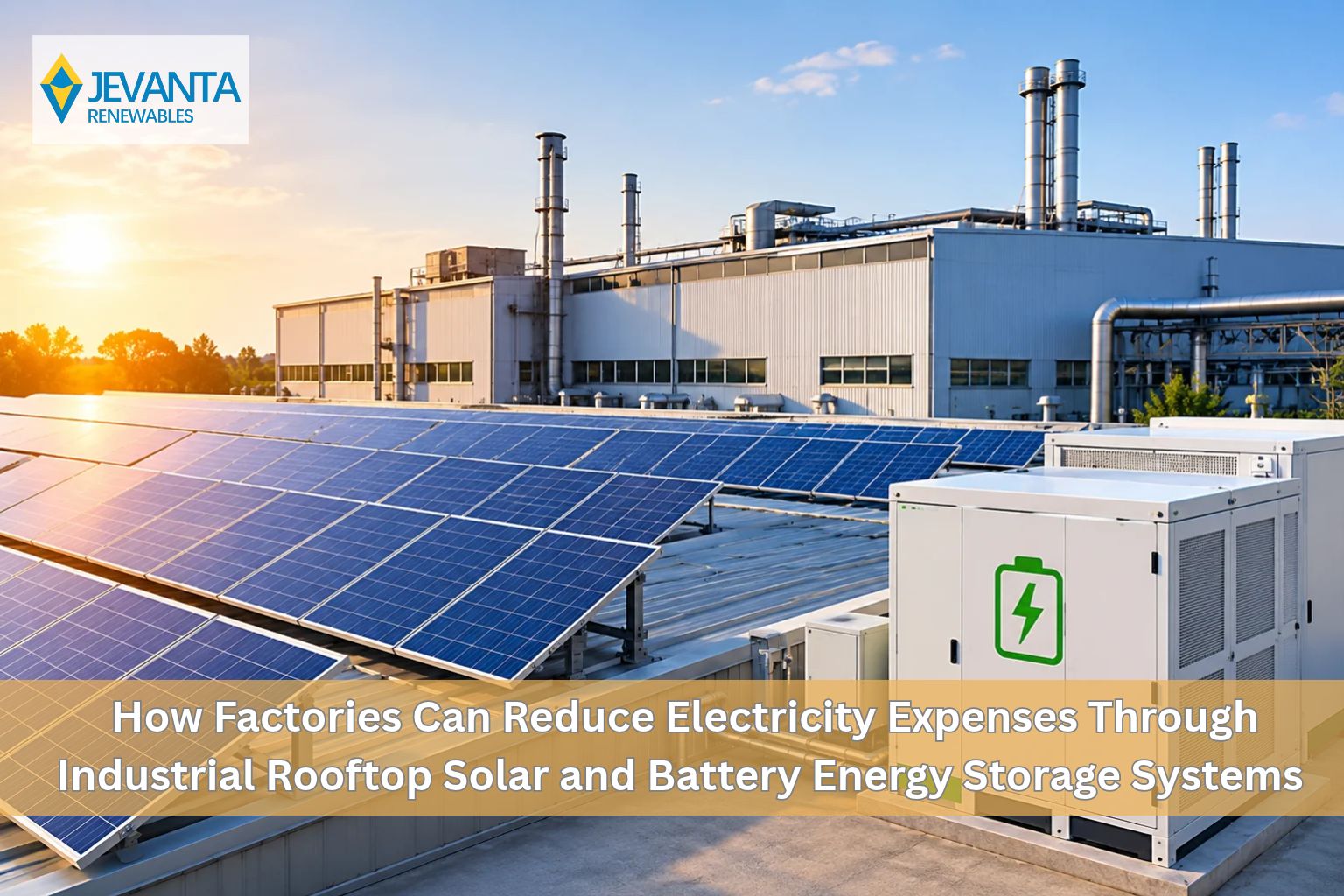
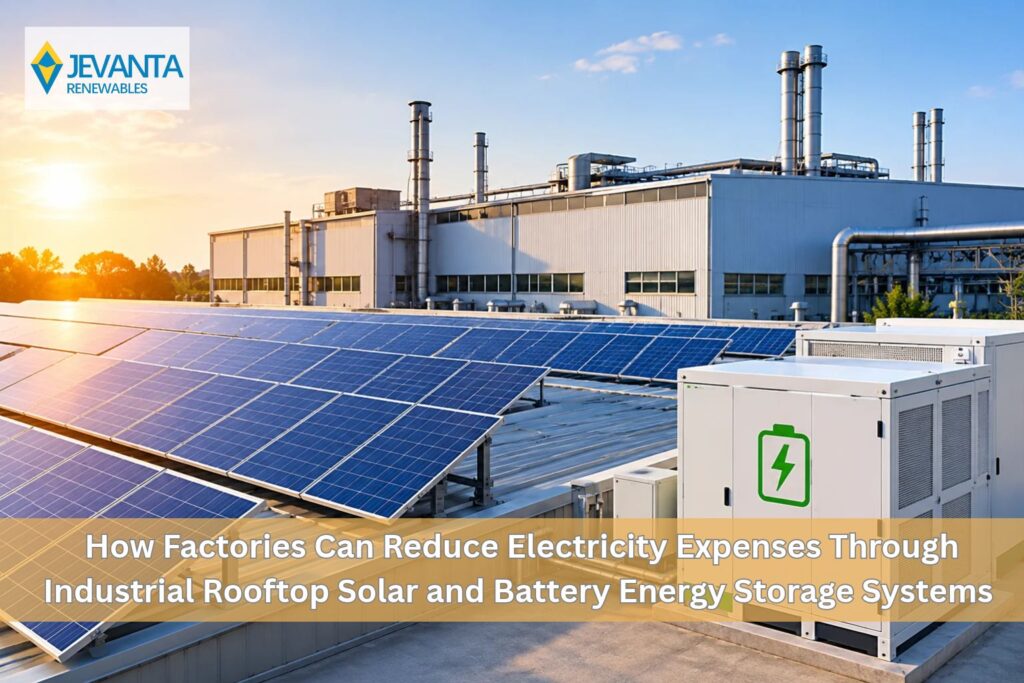
This is why industrial rooftop solar has moved from a “nice to have” to a line in the annual cost-control plan. A factory roof is unused real estate, and it can generate power for 25 years or more. Pair it with battery energy storage systems and the savings keep working after the sun goes down.
Why a Factory’s Power Bill Behaves Differently
A household bill is mostly about units consumed. A factory’s bill has more moving parts, and most savings opportunities hide in them.
- Demand charges: You pay for your peak draw, not only your total consumption. One badly timed start-up of heavy machinery can lift the charge for the whole month.
- Time-of-day pricing: Power drawn in peak slots costs more than power drawn off-peak. Many plants run their heaviest loads exactly when the grid is most expensive.
- Diesel backup: Every outage or voltage dip starts the generator, and diesel power is among the costliest you can buy.
- Power quality losses: Sudden interruptions rarely show up as a line item, but they cost you in scrapped batches, restarted lines and stressed equipment.
Most people don’t realise that a good solar and storage design addresses all four of these, not just the units on the bill.
What Industrial Rooftop Solar Does for Your Bill
The logic is simple. Factories run mostly in daylight hours, and solar generates in daylight hours. So the power your rooftop produces is consumed on the spot, meaning fewer units are bought from the grid at industrial tariffs.
Depending on your consumption pattern, roof area, and tariff category, solar power for factories can cut electricity costs by 60–70%. That figure isn’t a promise for every plant. A single-shift unit with a small roof will see different results than a three-shift unit with a large one. That’s why solar energy has become a standard part of cost planning for manufacturers, warehouses, and cold storage operators.
Once installed, the system also behaves like a hedge. Grid tariffs tend to move in one direction over time, but your solar generation cost is largely fixed after commissioning.
Is Your Roof Ready?
Before anyone talks about panel brands or payback, a good industrial solar panel installation in Mumbai begins with the roof itself. In our experience, these are the checks that decide a project:
- Roof type and age: RCC slabs, metal sheets, and asbestos sheets each need a different mounting approach. An old roof that needs replacement in three years should be sorted out first.
- Structural load capacity: The roof must carry the panels, the structure and wind loads, particularly during the monsoon.
- Shading: Water tanks, chimneys, nearby buildings and rooftop ducting can significantly cut generation.
- Usable area: As a rough guide, a kilowatt of solar needs around 8–10 square metres of shadow-free space, depending on the panels and layout.
- Sanctioned load and consumption pattern: Sizing the system to your daytime load matters more than building the biggest system the roof can take.
A site survey accounts for these factors before quoting any numbers. If a proposal arrives without one, treat it with caution.
Where Battery Energy Storage Systems Come In
Solar alone has one limit: it can only offset what you consume while the sun is up. Battery energy storage systems extend the benefit, and for factories, they do four useful jobs.
- Peak shaving: The battery discharges during your highest-demand moments, flattening the peak and trimming demand charges.
- Load shifting: Surplus solar power or cheap off-peak power is stored and used when grid rates are higher.
- Backup power: For critical loads, storage reduces dependency on diesel generators and keeps operations steady through short outages.
- Smoother power quality: Batteries respond in milliseconds, which protects sensitive equipment from dips and surges.
Industrial energy storage systems have become more practical as battery costs have fallen, but they aren’t automatically the right answer for every plant. If your operations run mainly in the daytime and your grid supply is stable, solar alone may deliver most of the value. If you run evening shifts, face frequent interruptions or pay heavily for peak demand, adding storage can change the economics noticeably. Honest advice here means modelling your actual load data instead of selling a bigger package.
Solar Alone or Solar Plus Storage?
Here’s a simple way to think about it. Start with the load profile. If most of your consumption falls between 9 am and 5 pm, begin with industrial rooftop solar and keep storage as a phase-two option. If your peak demand falls after sunset, or outages regularly send you to the diesel generator, ask for a combined design from the start. The best plans are often built to add storage later without redoing the electrical work.
Financing: You Don’t Need Heavy Upfront Capital
Plenty of factory owners assume solar means a large cheque on day one. It doesn’t have to. There are three common models:
- CAPEX: You invest upfront and own the asset, which gives you the maximum long-term savings.
- RESCO: A developer funds, owns and maintains the system, and you pay only for the power it generates, usually at a rate below your grid tariff.
- BOOT (Build-Own-Operate-Transfer): The developer builds and runs the plant for an agreed period and then hands it over to you.
Which one suits you depends on your cash position, tax planning and appetite for ownership. Many plants that start with RESCO to preserve capital move to ownership models later, as they expand.
What Good Installation Looks Like in Mumbai
Mumbai and the wider MMR belt, including Thane, Navi Mumbai, Taloja and Bhiwandi, bring conditions that a generic installer might gloss over.
Humidity and salt-laden air speed up corrosion on structures and connections, so material quality and coating specifications matter. Monsoon months reduce generation, and a credible forecast accounts for that instead of assuming ten months of perfect sun. Utility approvals and net metering need careful handling with the local DISCOM, and delays here can stall a project that is otherwise ready.
Then there’s what happens after commissioning. A solar plant isn’t a fit-and-forget asset. Panel cleaning, performance monitoring and fault detection decide whether you get the output promised on paper. That is why many plants prefer a solar panel installation company in Mumbai that handles design, EPC, and O&M under one roof, so one team is accountable for the plant’s performance throughout its life.
If you’re also exploring battery energy storage systems in Mumbai, check that your installer has real experience integrating storage with solar, not just selling the hardware. Integration is where projects succeed or fail.
Questions to Ask Before You Sign
- Will you do a site survey and share the generation simulation?
- What assumptions sit behind the savings projection (tariff escalation, degradation, monsoon dip)?
- Who handles approvals and net metering paperwork?
- What does the O&M package include, and what are the performance guarantees?
- Can the design accommodate storage later?
- Can you show me commissioned industrial projects of a similar scale?
An installer who answers these plainly and with data is worth shortlisting. One who dodges them probably isn’t.
The Bottom Line
Electricity will remain one of the highest controllable costs in any factory. Industrial solar power systems take a meaningful share of it off the grid, and storage brings peak demand and backup costs under control. The numbers work best when the design is built around your load, your roof and your financing position.
If you’d like to see what this could look like for your plant, Jevanta Renewables has an ROI calculator for commercial and industrial solar savings on its website. Its team can also walk through your site and consumption data in a free consultation, with no obligation to commit to anything.