There’s a number that doesn’t get nearly enough attention in the energy conversation: 666 million. That’s how many people on this planet still live without access to electricity, as of 2025. Meanwhile, over 2 billion people cook their meals every day on open fires or polluting solid fuels, breathing in air that shortens their lives by years.
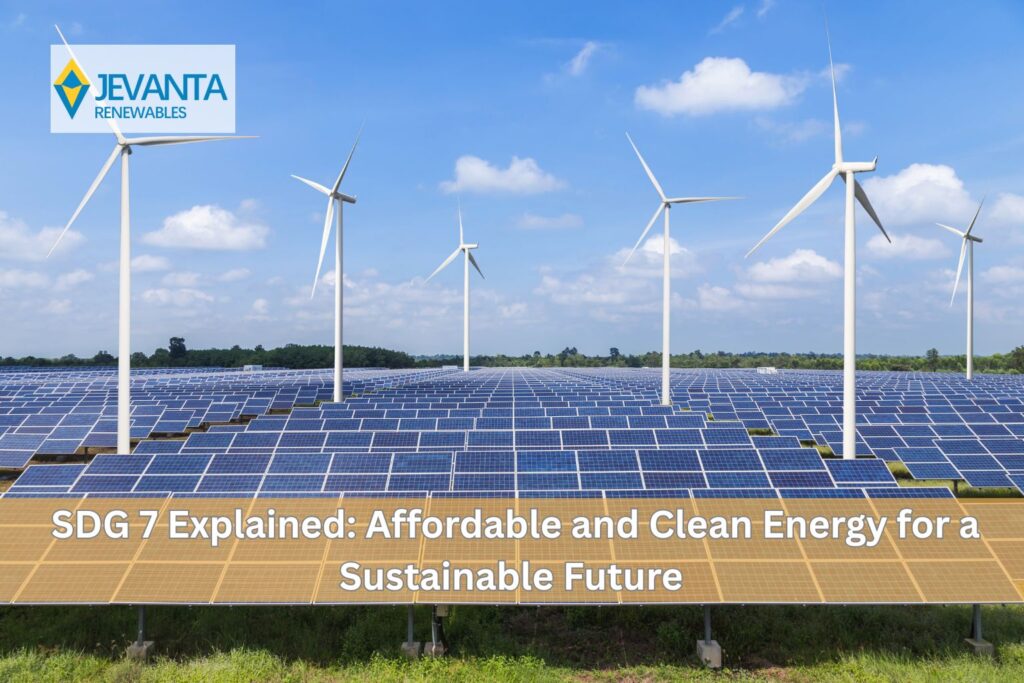
SDG 7, Sustainable Development Goal 7: Affordable and Clean Energy, exists precisely because this is unacceptable in a world that has the technology, capital, and knowledge to fix it. And for India, no SDG is more personal, more urgent, or more intertwined with the country’s entire economic trajectory than this one.
What Is SDG 7, And Why Does It Matter?
In 2015, the United Nations adopted 17 Sustainable Development Goals as a universal blueprint for a better world by 2030. SDG 7 carries a deceptively simple mandate: “Ensure access to affordable, reliable, sustainable, and modern energy for all.”
Simple to say. Remarkably hard to deliver at scale.
The goal breaks down into five concrete targets. Universal access to modern energy services. A substantially higher share of renewables in the global energy mix. A doubled rate of improvement in energy efficiency. Stronger international cooperation on clean energy technology. And expanded infrastructure for developing nations to access sustainable energy.
What makes SDG 7 different from a policy aspiration is that energy sits underneath almost everything else. Health systems need power to function. Schools need electricity to keep children in classrooms after dark. Factories and farms need reliable energy to generate jobs and food. Climate action needs a rapid transition away from fossil fuels. SDG 7 is, in many ways, the foundation on which every other Global Goal is built.
India’s Role in the Global Clean Energy Story
If you want to understand the real scale of what’s possible on SDG 7, India is the place to look. This is a country that electrified over 600 million people in a single generation, one of the most ambitious energy access programmes in human history. The Saubhagya scheme alone connected hundreds of millions of households to the grid within just a few years. That is not a policy success story; it is an engineering and governance achievement of a genuinely rare kind.
But access to electricity is only the first chapter. The larger story is about what kind of energy India builds on from here.
As of March 2026, India has installed a total non-fossil fuel capacity of 283.46 GW, including 150.26 GW of solar power, 56.09 GW of wind, and 51.41 GW of large hydro. To put that in perspective, renewable sources now account for more than 50% of India’s total installed electricity capacity, a target India achieved five years ahead of schedule under its Paris Agreement commitments.
In July 2025, renewables met 51.5% of the country’s total electricity demand of 203 GW, India’s highest-ever share of electricity generation from renewables.
These numbers matter not just for India’s own development. They are proof that a large, diverse, developing economy can scale clean energy aggressively, and that the transition is not a luxury reserved for wealthy nations.
The Three Pillars of SDG 7, and Where India Stands
1. Universal Energy Access
India has made extraordinary strides here. Near-universal household electrification has been achieved, something that seemed distant just a decade ago. The challenge now is the quality and reliability of that access. Having a connection is not the same as having uninterrupted, affordable power. For industries, factories, and commercial establishments, particularly in Tier 2 and Tier 3 cities and rural Maharashtra, grid reliability remains a genuine constraint.
This is precisely where distributed renewable energy, rooftop solar, and microgrids become more than just economic tools. They make a direct contribution to SDG 7’s access goals, putting stable, clean power in the hands of communities and businesses that the traditional grid struggles to serve consistently.
2. Increasing the Share of Renewable Energy
This is the pillar where India’s momentum is most visible and most commercially significant.
India ranked 3rd globally in installed renewable energy capacity as of December 2025, with solar capacity at 135.81 GW, leading the renewable segment. India has also officially surpassed Japan to become the world’s third-largest solar energy producer.
The national ambition is clear: India aims to achieve 500 GW of installed electricity capacity from non-fossil sources by 2030, a target that requires relentless year-over-year capacity addition. Non-fossil capacity addition in 2025–26 was 55.29 GW, the highest annual increase in India’s history.
For businesses operating in India right now, this trajectory isn’t just inspiring, it’s actionable. Every commercial rooftop that goes solar, every industrial facility that switches to captive renewable power, every warehouse or institution that installs a ground-mounted system is a direct, tangible contribution to this goal. SDG 7 isn’t only a government programme. It scales through private sector action.
3. Improving Energy Efficiency
This is the quieter pillar, less dramatic than massive capacity additions but arguably just as important. Energy intensity will need to improve by 4% per year on average to meet the SDG 7.3 target of doubling the global rate of energy efficiency improvement. Globally, progress has been sluggish at around 0.8%.
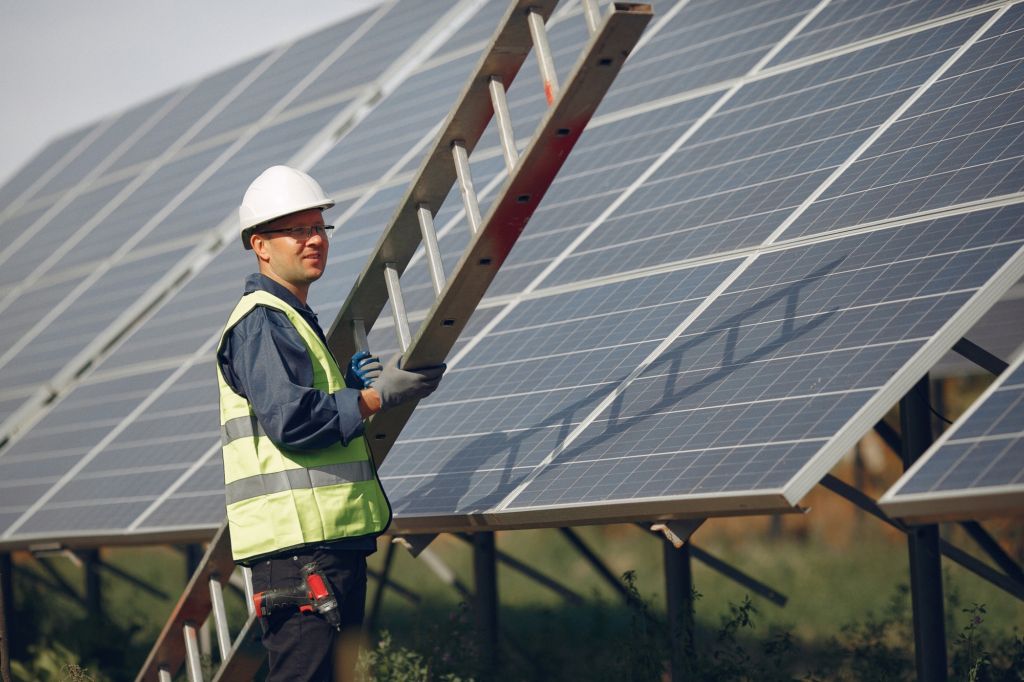
For the Indian industry, energy efficiency is where significant cost savings are hiding in plain sight. Solar energy reduces grid consumption, but combining solar with energy management systems, battery storage, and smart monitoring delivers a compounding effect: lower consumption, lower bills, and a measurably reduced carbon footprint. This is the integrated approach that serious EPC partners are bringing to commercial and industrial clients today.
What the Sustainable Development Goals Mean for Indian Businesses
Here’s where things get interesting, and often misunderstood.
SDG 7 is frequently framed as a humanitarian or policy goal. What gets less attention is the business case. India’s Sustainable Development Goals commitments, including SDG 7, are directly shaping regulatory and financing environments that affect every commercial energy decision made in this country.
The Renewable Purchase Obligation (RPO) mandates that DISCOMs and large consumers source defined percentages of their electricity from renewable sources. The PLI scheme is accelerating domestic solar manufacturing. Green financing instruments, including sovereign green bonds issued by the RBI, are making capital available specifically for clean energy transitions. Under the Income Tax Act, solar power generating systems are eligible for 40% Written Down Value depreciation in the year of commissioning, a powerful incentive for profitable businesses.
What this means in practice is that the financial architecture around clean energy in India is being deliberately structured to make the renewable transition the economically rational choice, not just the responsible one. Businesses that align their energy strategy with SDG 7 goals are, in most cases, also making the most financially astute decisions available to them.
Renewable Energy India: Beyond the Numbers
It would be easy to reduce India’s clean energy story to a set of impressive statistics. But the human dimension matters too.
Clean energy India means the factory worker in Bhiwandi whose plant runs on solar power, reducing the company’s cost of production and preserving jobs. It means the cold chain facility in rural Maharashtra that can operate reliably through grid outages because it has a hybrid solar-plus-storage system. It means the school that stays lit after sunset. The hospital that doesn’t lose power during surgery. The small business whose electricity bill no longer eats into its margins.
What most people don’t realise is that the gap between SDG 7 as a global commitment and SDG 7 as a lived reality is closed not in UN conference rooms, it’s closed one project at a time, on rooftops and ground-mounted sites across the country.
The 2030 Deadline Is Closer Than It Feels
With 2030 now less than five years away, the SDG7 Tracking Report 2025 estimates that annual investments of USD 4.2-4.5 trillion are needed globally to achieve SDG 7 targets. Progress on clean cooking has largely stalled. Energy efficiency improvements are running far below the required pace. Around 685 million people still lack electricity, and more than 2 billion depend on traditional biomass for cooking.
India, to its credit, is on the right trajectory toward its own targets, but the pace needs to be maintained and, in several areas, accelerated. The commitment to 500 GW of non-fossil capacity by 2030 requires consistent, large-scale project execution across solar, wind, biomass, and storage, year after year, without pause.
This is not the moment for the renewable energy sector in India to slow down. It is the moment to deepen.
How Jevanta Renewables Connects to SDG 7
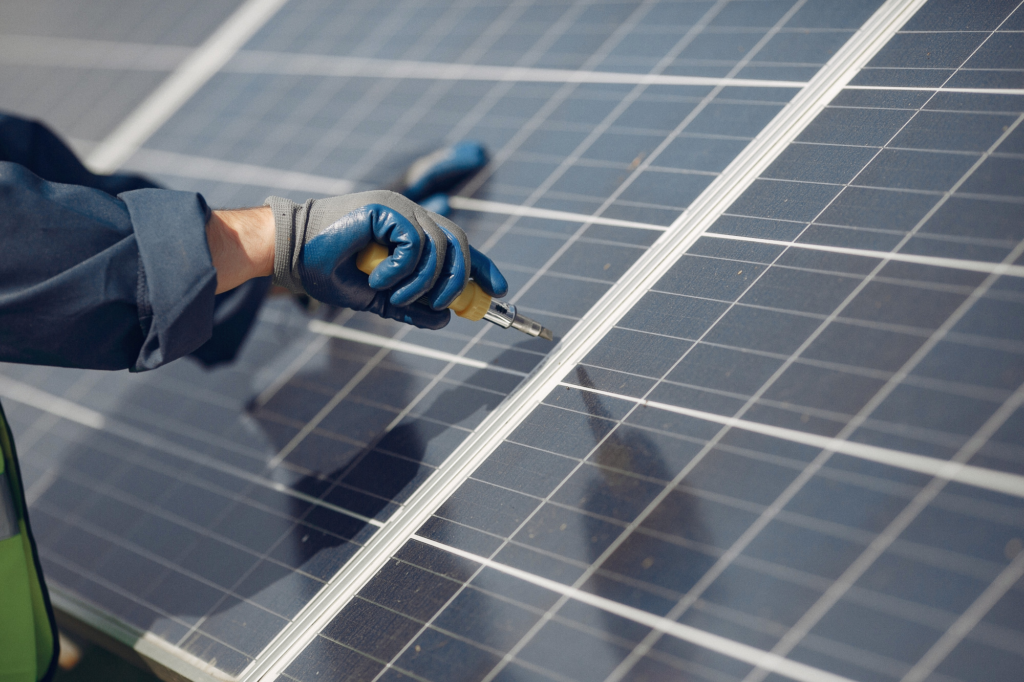
At Jevanta Renewables, the work we do every day, solar EPC projects for industries, institutions, and commercial complexes across India and beyond, is, in a very direct sense, SDG 7 made tangible. With over 950 MW commissioned across projects in India, the UAE, Vietnam, and Africa, and 25+ years of engineering experience behind every project we undertake, we understand that clean energy is not an abstract goal. It is a system that has to work, reliably, efficiently, and economically, for the people and businesses it serves.
Whether it’s a rooftop solar installation in Mumbai, a utility-scale ground-mounted project in Maharashtra, a Battery Energy Storage System for a manufacturing facility, or a waste-to-energy plant powered by our patented technology, each project moves the needle on client energy costs, on India’s renewable targets, and on the commitments the world made to itself in 2015.
If your organisation is ready to be part of India’s SDG 7 story, not as a tagline but as a real, bankable energy project, we’d like to talk.
Reach out to the Jevanta Renewables team for a consultation on your facility’s clean energy potential.